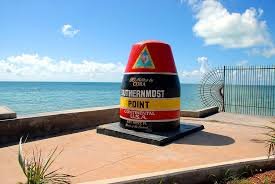
The first sign you’re approaching Key West isn’t a building or a beach.
It’s a feeling.
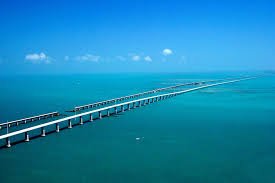 Somewhere along the Overseas Highway, usually right after crossing the legendary Seven Mile Bridge, the pace of life shifts. The water turns impossibly clear. The air grows heavier with salt and humidity. And the idea of rushing anywhere suddenly feels ridiculous. By the time you reach Mile Marker 0 at the end of U.S. Route 1, you’ve arrived in a place that feels completely different from the rest of Florida. Key West isn’t just another tropical destination. It’s an island with a personality.
Here you’ll find pastel wooden houses built during the wrecking era of the 1800s, roosters wandering the streets like they own the place, and bars where the live music starts before sunset and rarely stops. The island’s official motto, “One Human Family,” reflects the fiercely independent spirit that locals have embraced for generations.
That spirit even led Key West to briefly declare independence from the United States in 1982, creating the legendary “Conch Republic.” Today the island balances a lot of identities at once. It’s a laid-back beach escape, a literary landmark, a culinary hotspot, and one of the most entertaining party towns in America. Whether you’re visiting for a long weekend, a spring break escape, or a deeper exploration of the Florida Keys, Key West delivers a travel experience that feels unlike anywhere else in the country.
Old Town is the historic center of Key West and where most visitors spend their time.
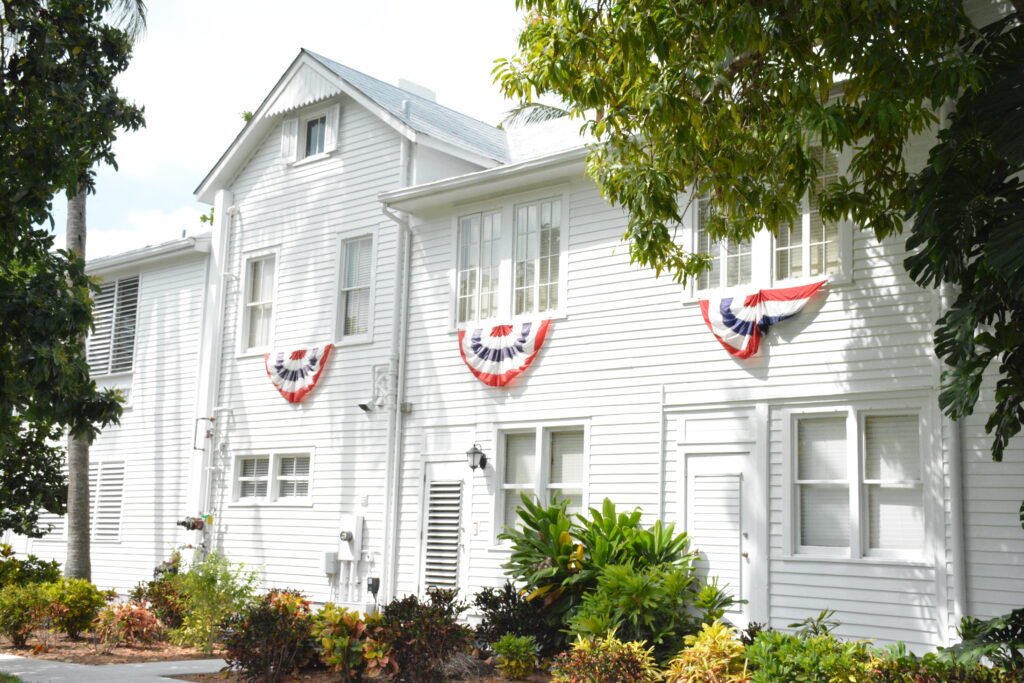
The neighborhood is famous for its colorful wooden Conch houses, many built during the 19th century using architectural styles imported from the Bahamas. Wide porches, metal roofs, and tropical gardens give the area a distinctly Caribbean feel.
This part of the island also contains two of Key West’s most famous landmarks.
First is Duval Street, the island’s main artery. Stretching just over a mile from the Atlantic Ocean to the Gulf of Mexico, Duval Street packs more bars, restaurants, and live music venues into a single stretch of road than almost anywhere else in Florida.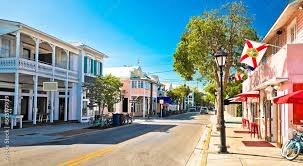
Then there’s the Historic Seaport, also known as Harbor Walk. Once the center of the wrecking industry, the marina is now home to waterfront restaurants, fishing boats, and sunset sailing excursions.
Walking along the docks in the early evening is one of the best ways to experience the island’s maritime roots.
Food plays a huge role in the culture of Key West, blending influences from the Caribbean, Cuba, and the American South.
One of the island’s most famous local delicacies is Key West pink shrimp. These shrimp are smaller than many varieties found elsewhere but prized for their sweet flavor and firm texture. Restaurants across the island serve them grilled, fried, or tossed into seafood pastas. Another local specialty is conch, a large sea snail that has been part of island cuisine for centuries. Conch fritters, chowder, and conch salad are staples of many menus.
But no dish defines Key West more than Key lime pie.
And locals take the authenticity of this dessert very seriously.
Real Key lime pie should be pale yellow, not bright green. The filling comes from the juice of small Key limes mixed with condensed milk and egg yolks, usually baked into a graham cracker crust.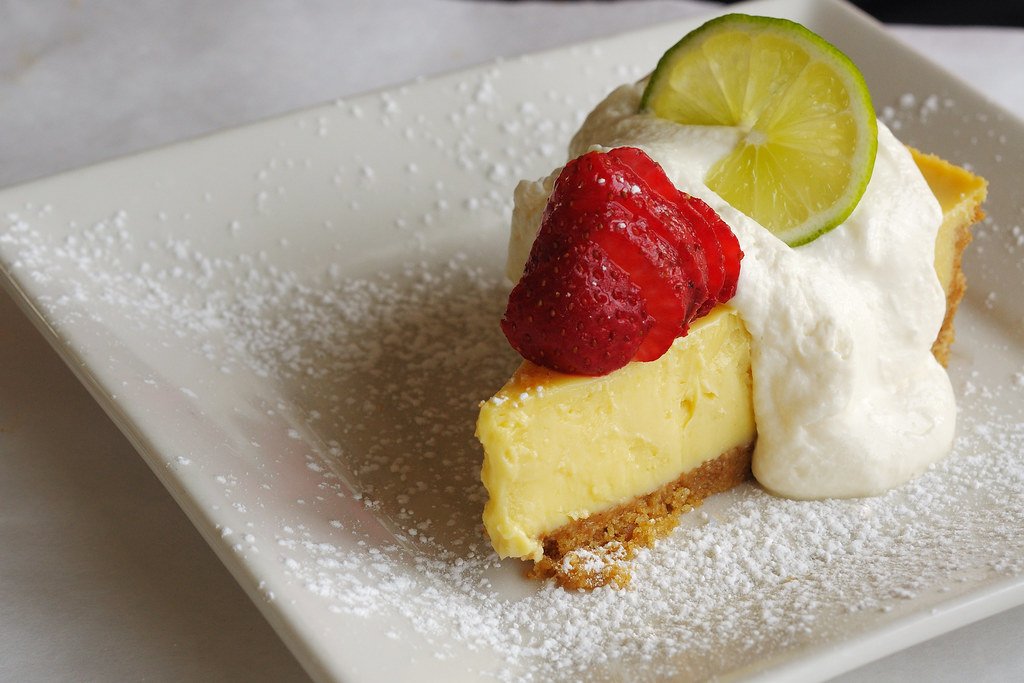
Two legendary spots dominate the debate over the best slice in town.
Kermit’s Key Lime Shop serves a classic version that has become famous among visitors, while Blue Heaven offers a towering slice topped with an enormous layer of meringue.
Trying both is practically a requirement.
When the sun goes down, Key West shifts into a completely different rhythm.
The famous Duval Crawl is a rite of passage for many visitors. Starting at the northern end of Duval Street and working your way south, you’ll pass a mix of historic bars, live music venues, and quirky cocktail spots.
One of the most famous stops is Sloppy Joe’s Bar, a longtime gathering place that once counted Ernest Hemingway among its regulars.
For a more local vibe, head to the Green Parrot Bar, a legendary dive known for its live blues, reggae, and rock performances.
It’s loud, unpolished, and beloved by locals.
On the luxury end of the dining spectrum, one experience stands above the rest.
Latitudes on Sunset Key is accessible only by boat and offers one of the most romantic dining settings in the Florida Keys. Watching the sunset from a beachfront table while the sky turns shades of orange and pink is an unforgettable Key West moment.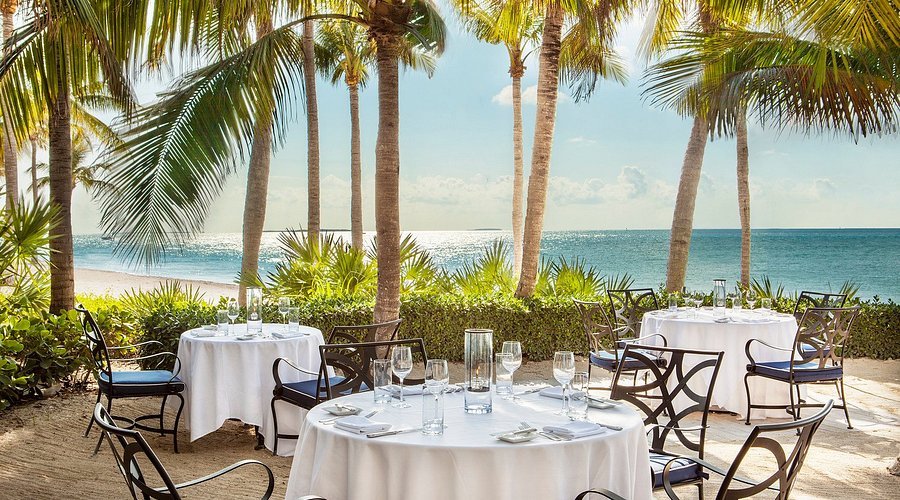

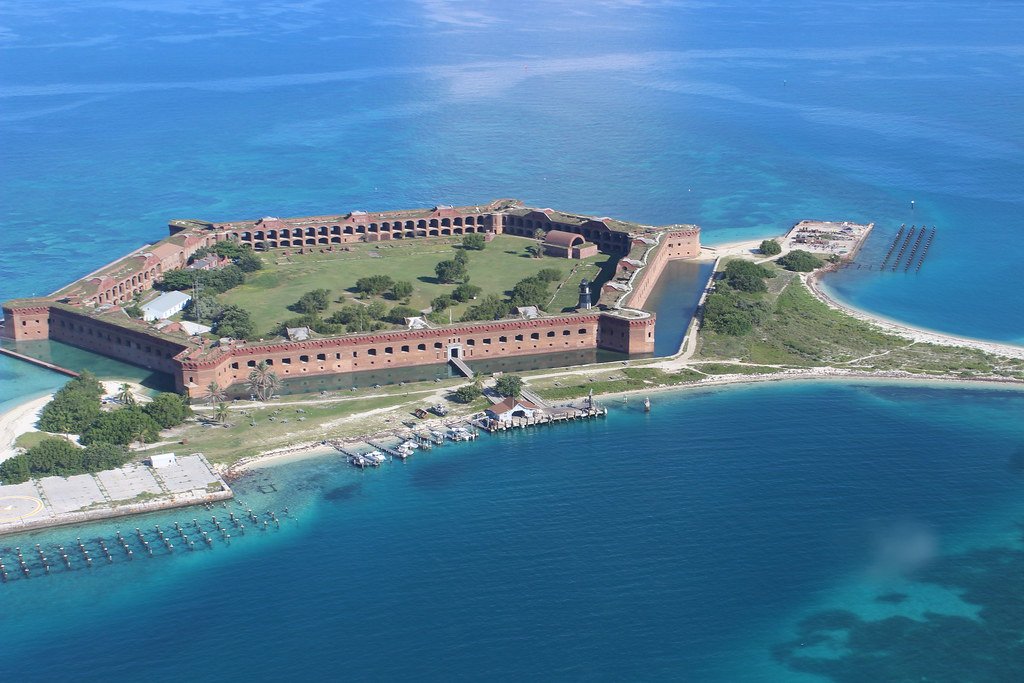
Beyond the nightlife and history, Key West is surrounded by some of the most unique marine ecosystems in the United States. The island sits near the Great Florida Reef, the only living coral barrier reef in the continental United States. Snorkeling and diving trips leave the harbor daily, giving visitors a chance to explore colorful coral formations, tropical fish, and shipwrecks beneath the surface. For travelers willing to venture further, one of the most spectacular destinations in the Florida Keys lies about 70 miles west of Key West. Dry Tortugas National Park is home to Fort Jefferson, the largest brick structure in the Western Hemisphere. Accessible only by ferry or seaplane, the park offers pristine beaches, snorkeling opportunities, and a sense of isolation rarely found in modern travel.
Every evening, just before the sun disappears into the Gulf of Mexico, something special happens in Key West.
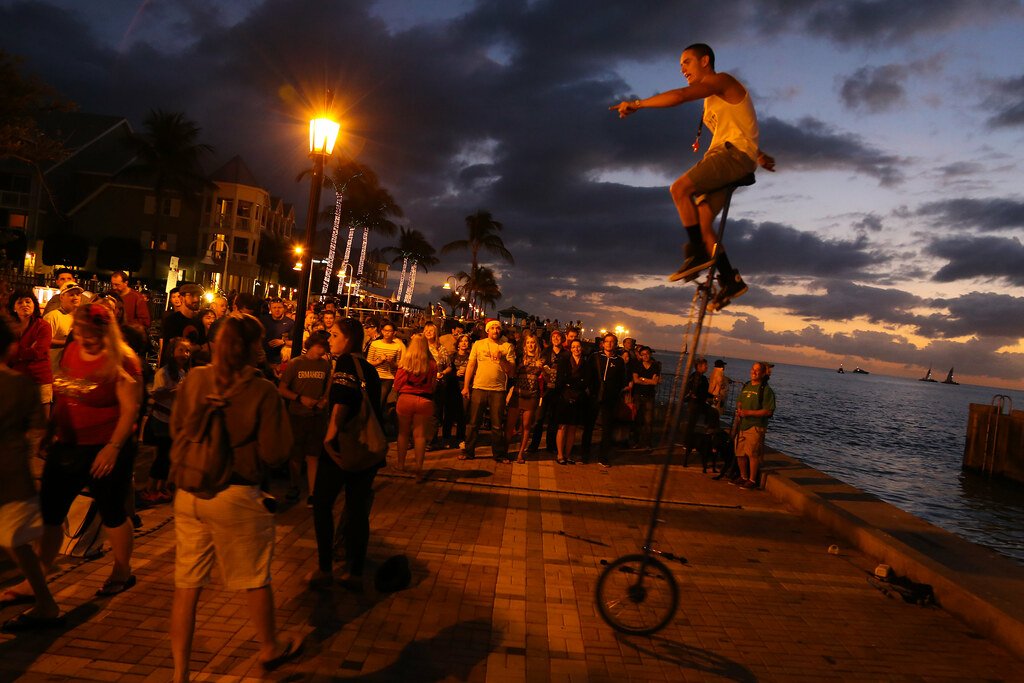
Crowds gather at Mallory Square for the island’s famous Sunset Celebration.
Street performers juggle flaming torches. Musicians play guitars. Artists display handmade crafts while sailboats drift across the horizon.
Then the sky turns orange, pink, and purple as the sun slips below the water.
People clap.
Strangers toast with rum cocktails.
And for a moment, everyone shares the same quiet realization.
At the end of the road, life feels just a little bit better.