




Introduction
Years ago, when I was flying Cessna Caravans on Essential Air Service routes in the Midwest, I watched a passenger step off the airplane in Burlington, Iowa, look around, and ask where the mountains were.
He thought he was in Burlington, Vermont.
Instead, he had booked BRL, not BTV. We had flown exactly what his ticket said: ORD to BRL. Contract fulfilled. Problem was, he needed Vermont, not Iowa. At that point there was nothing we could do except point him back toward Chicago and let him start over. It was an expensive lesson in what airport codes actually mean.
That story has stuck with me because it gets to the heart of modern air travel. Most people see those three-letter codes on boarding passes, bag tags, and confirmation emails, but they do not always realize how much those codes matter until something goes wrong. A single letter can separate Chicago (ORD) from Norfolk (ORF), Atlanta (ATL) from Appleton (ATW), or San Jose, California (SJC) from San José, Costa Rica (SJO) from San José, Mexico (SJD) from San Juan, Peurto Rico (SJU). The code is not a detail. It is the destination.
And once you understand airport codes, airline hubs, and how the system is built, travel starts making a lot more sense. You stop seeing a trip as a random series of flights and start seeing the logic underneath it. That is useful whether you travel once a year or every month.
What Airport Codes Actually Are
For most travelers, the code you see is an IATA code. That is the three-letter code used in booking systems, on tickets, on boarding passes, and on baggage tags. IATA maintains those location codes as part of the worldwide standard that lets airlines, airports, and reservation systems all speak the same language.
Behind the scenes, there is also an ICAO code, which is the four-letter operational code pilots, dispatchers, and air traffic control use. In the contiguous United States, those usually start with K, so ORD becomes KORD and ATL becomes KATL. Travelers usually do not need ICAO codes, but if you have any aviation background, you will recognize them instantly.
A lot of people assume airport codes are random. They are not. Some are simple abbreviations. Some are leftovers from earlier names. Some reflect old weather stations, railway stations, or military fields. And some only make sense once somebody shows you how to look at them.
That is where this gets fun.
Why Some Codes Make Sense and Others Don’t
Some airport codes are easy.
ATL = ATLanta
DEN = DENver
MIA = MIAmi
SEA = SEAttle
Those are friendly. They do exactly what you want them to do.
Then you get the more interesting ones.
ORD = ORcharD Field
Chicago O’Hare’s code comes from the airport’s old name, Orchard Field, before it was renamed for Butch O’Hare.
Memory jogger: Chicago = ORcharD = ORD.EWR = NEWaRk, minus the N
Newark could not lead with N because of historical letter reservations, so the code became EWR.
Memory jogger: Newark without the N.MSY = Moisant Stock Yards
New Orleans is one of those great weird codes.
Memory jogger: Get MesSY in New Orleans.MCO = McCoy
Orlando International got its code from the former McCoy Air Force Base.
Memory jogger: Mickey’s Corporate Office.
DFW = Dallas Fort Worth
One airport serving a two-city metro identity.
Memory jogger: Two cities, one airport.DCA = District of ColumbiA
Reagan National’s code points back to its Washington identity.
Memory jogger: District of Columbia Airport.IAD = International Airport Dulles
It was changed from an earlier formulation to avoid confusion with DCA.
Memory jogger: International Airport Dulles (or DC)PHX = PHoeniX
Straightforward once you see it, but the X also reflects the old expansion from shorter legacy identifiers.
Memory jogger: Phoenix keeps the X.LAX = Los Angeles + X
Los Angeles originally used a shorter identifier and added the X when codes expanded to three letters.
Memory jogger: LA plus an X.
That is really the trick. Once you start seeing the letters, the codes stop feeling like random noise.
Canada Has a Pattern, Too
Canadian airports are one of the easiest systems to recognize once you know the rule. A lot of major Canadian airport codes begin with Y because of older weather-station and telegraph conventions that carried forward into the modern coding system. That is why you get codes like YVR for Vancouver and YYZ for Toronto.
A few examples:
YVR = Y + VancouveR
Memory jogger: Y means Canada, VR gets you Vancouver.YYZ = Y + old YZ station identifier
Memory jogger: If you know the song title, you already remember Toronto.YUL = Y + UL from the local site history around Montreal
Memory jogger: Y means Canada, UL means Montreal is one you just learn.
You do not need to master the whole Canadian system. You just need to know that Y is often your first clue you are looking at Canada.
How the Hub-and-Spoke System Changed Air Travel
Before deregulation, airlines often operated more direct, thinner routes under a heavily regulated environment. After U.S. deregulation in 1978, carriers had more freedom to redesign their networks around profitability and efficiency, and the hub-and-spoke model became dominant. Instead of trying to connect every city directly to every other city, airlines concentrated traffic through major hubs.
That is why someone in a smaller market usually flies to a hub first. Rather than run a nearly empty nonstop from every regional airport to every major destination, the airline sends passengers into a hub, combines that traffic, and then fills larger, more efficient airplanes on the trunk routes. I have seen that system from the inside, and it is the reason smaller communities can still connect into the larger air network at all.
The downside, of course, is that hubs concentrate risk along with efficiency. Weather in Chicago, Atlanta, Dallas, or Denver does not just affect people in those cities. It can ripple across an airline’s whole network. That is why knowing where your hub is, and how your airline uses it, actually matters as a traveler.
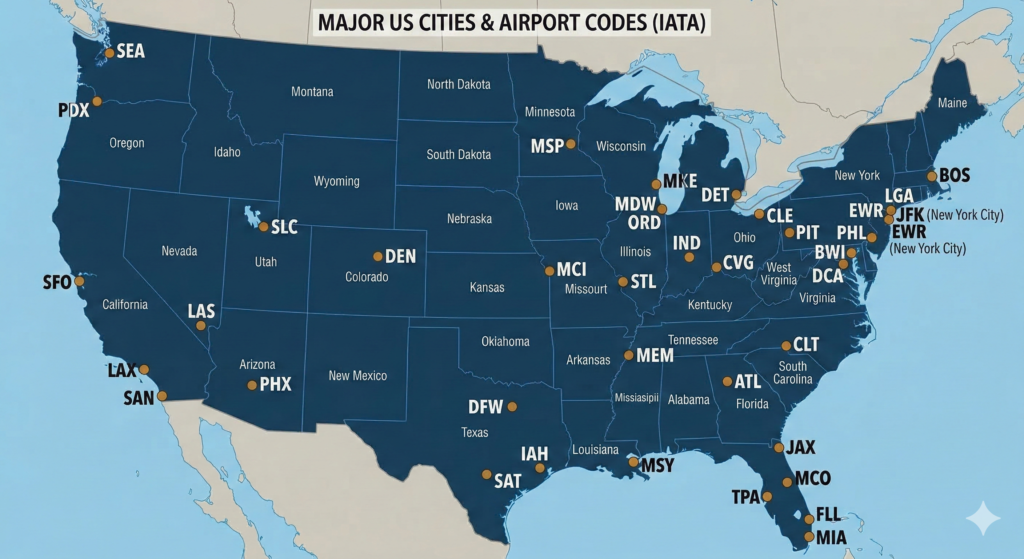
The Major U.S. Airline Hubs You Should Know
If you want to understand how your itinerary is built, start with the hubs.
American Airlines hubs
American lists hubs in CLT, ORD, DFW, LAX, MIA, JFK/LGA as its New York presence, PHL, PHX, and DCA. For most travelers, the airports you will notice most often are DFW, CLT, ORD, PHL, PHX, and MIA, with LAX, JFK, and DCA also showing up depending on route patterns.
Delta hubs and key hubs
Delta’s official stats page describes significant hubs and key markets including ATL, DTW, MSP, JFK, LGA, SLC, LAX, SEA, and BOS, along with major international partner hubs abroad. For day-to-day U.S. travelers, ATL is the big one, then DTW, MSP, SLC, JFK, and increasingly LAX and SEA depending on the trip.
United hubs
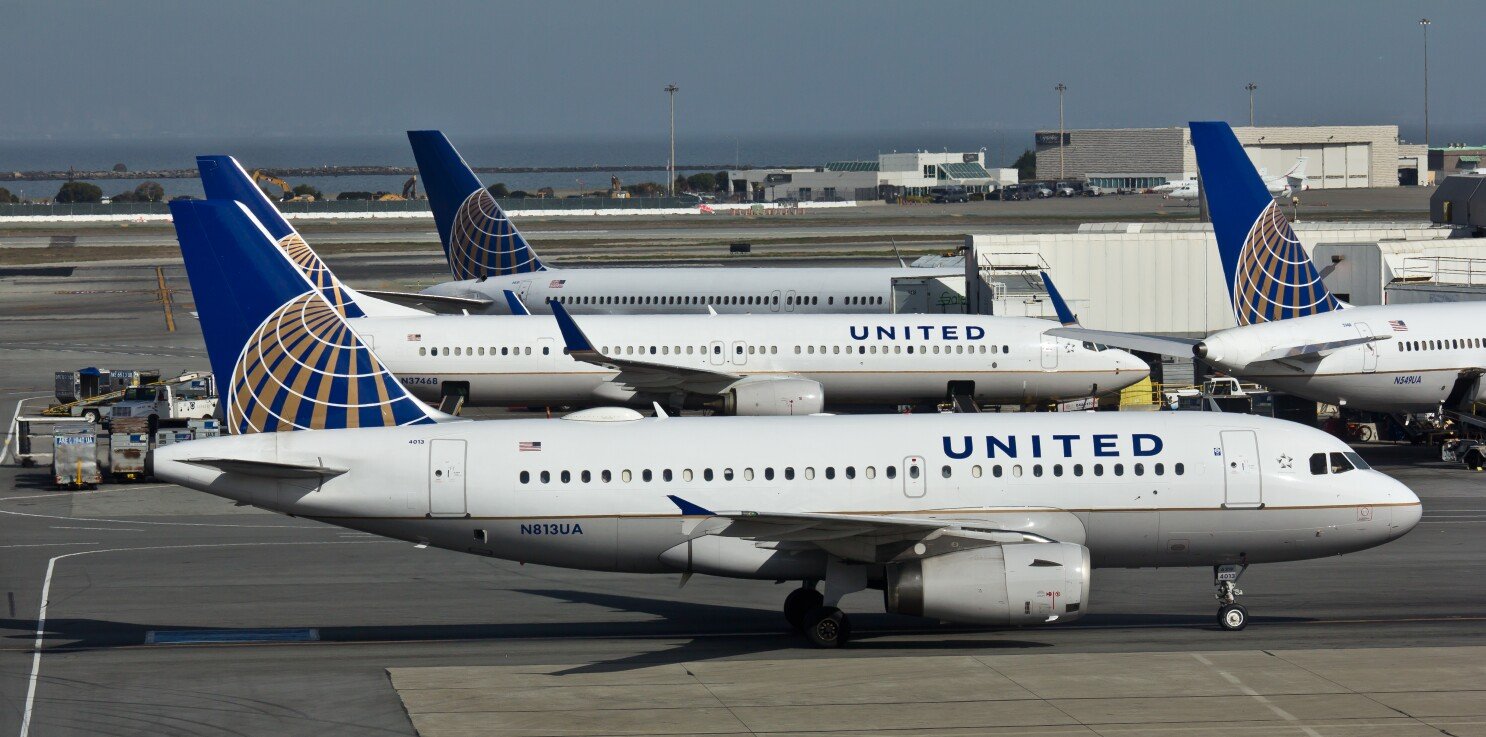
United’s newsroom lists hub airports at ORD, DEN, IAH, LAX, EWR, SFO, and IAD. Those are the ones that explain most United routings in the U.S. and across the Atlantic and Pacific.
Southwest’s system
Southwest does not lean on the classic banked-hub model the same way the legacy carriers do, but in practical terms a few airports matter a lot: MDW, BWI, DEN, DAL, HOU, LAS, and PHX are some of the places you will see repeatedly in its network. Southwest’s route maps and destination structure make that clear even if the airline talks more about stations and networks than traditional legacy-style hubs.
That matters because a connection in ORD means something different from a connection in MDW, and a flight through DFW tells you something different than one through DAL.
Knowing how airlines use their hubs can make a real difference when you’re booking flights.
If you’re set on flying a specific airline, you’re also committing to that airline’s network. That means your connections are going to run through their hubs, whether you think about it or not.
For example, if you’re flying out of Green Bay, Wisconsin (GRB) on United, you are almost always connecting through Chicago O’Hare (ORD). As of now, that’s really the only hub United serves from Green Bay.That matters more than people realize. If you’re traveling in January, you’re now relying on two cold-weather airports instead of one. Green Bay and Chicago can both be dealing with snow, delays, or cancellations at the same time. That increases your risk of disruption pretty quickly.
Now compare that to Delta.
Delta also serves Green Bay, but typically routes you through Atlanta (ATL). You’re still connecting, but now you’ve split your risk between a cold-weather departure point and a warm-weather hub. In the winter, that can make your trip a lot more reliable. Of course, nothing is perfect. Atlanta has its own challenges, especially in the spring and summer when thunderstorms roll through.
The point is, once you understand where an airline’s hubs are, you can start making smarter decisions about routing instead of just picking a flight based on time or price.
Useful Booking Trick That Can Also Trip You Up
Sometimes booking systems let you search an entire city or metro area instead of one specific airport. That can be incredibly useful, especially if you are flexible and want to compare schedules and prices across multiple airports. IATA formally maintains these metropolitan or city codes in addition to individual airport codes.
The important thing to remember is this: you are not flying into the city code itself. You are using it as a search bucket.
NYC
If you search NYC, you are not flying into “NYC.” You are searching New York City area airports, which can include JFK, LGA, and EWR, and in some tools may surface additional regional options depending on how the search engine handles the metro area. Your actual ticket will still be tied to a specific airport.
LON
If you search LON, you are searching London-area airports such as LHR, LGW, LCY, LTN, and STN. That is useful, but it can also create problems if you do not notice that your arrival and departure are at different airports on opposite sides of the city.
CHI
If you search CHI, you are searching Chicago-area airports, primarily ORD and MDW. Same city, very different airport experience. O’Hare is a major global hub. Midway is much more Southwest-oriented.
WAS
Washington uses WAS as its metropolitan code. That search can include DCA, IAD, and BWI. That one matters a lot because those airports are not interchangeable from a ground-transportation standpoint. DCA is close in. IAD is farther out. BWI is in the Baltimore orbit, even though it serves the Washington market too.
There are also regions where the behavior is more practical than formal.
South Florida
In real-world trip planning, South Florida acts like a multi-airport region with MIA, FLL, and PBI, even if travelers usually search those individually rather than through one famous city code the way they do with NYC or LON.
Dallas
Dallas is its own good reminder that metro logic and airport logic are not always the same. DFW is the giant regional airport. DAL is Love Field. You can have very different trips depending on which one you choose.
Southern California
And Southern California might be the best example of all. LAX, BUR, SNA, and ONT can all be valid options depending on where you are actually going. People say “Los Angeles” all the time when what they really mean is “somewhere in greater Southern California.” Those are not the same thing.
My rule is simple: search broad, confirm specific. City code searches are great. Just make sure you know exactly which airport you are flying into and out of, because they may not be the same.
The 10 Airport Codes Every Traveler Should Know First
If you only memorize ten, start here.
ORD = ORcharD Field
Chicago O’Hare. A huge American and United gateway.
Memory jogger: Chicago = Orchard = ORD.ATL = ATLanta
Delta’s home fortress and one of the world’s most important hubs.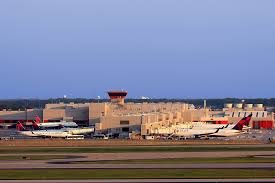
DFW = Dallas Fort Worth
American’s flagship hub.
Memory jogger: Two cities, one airport.DEN = DENver
Big United and Southwest airport.
Memory jogger: Clean and simple.LAX = LA + X
Los Angeles.
Memory jogger: LA with an X tacked on.JFK = John F. Kennedy
Major New York international gateway.
Memory jogger: Presidential airport.EWR = NEWaRk
Big United airport for New York and transatlantic traffic.
Memory jogger: Newark without the N.MCO = McCoy
Orlando.
Memory jogger: Mickey’s Corporate Office.SFO = San FranciscO
Major United airport on the West Coast.
Memory jogger: First letters and last letter.CLT = CLT from Charlotte
Major American hub.
Memory jogger: Charlotte without the vowels.
Airport Code Reference Guide
Here is the practical reference section. I’ve added short explanations or memory joggers where they help.
Major airline hubs and business-heavy airports
ORD Chicago O’Hare = ORcharD Field (American and United)
DFW Dallas/Fort Worth = Dallas Fort Worth (American)
CLT Charlotte = consonants from Charlotte (American)
PHL Philadelphia = PHiLadelphia (American)
PHX Phoenix = PHoeniX (American and Southwest)
MIA Miami = MIAmi (American)
DCA Washington National = District of ColumbiA (American)
JFK New York Kennedy = John F. Kennedy (JetBlue, American, and Delta)
LGA LaGuardia = LaGuardiA (American and Delta)
ATL Atlanta = ATLanta (Delta and Southwest to a small extent)
DTW Detroit = DeTroit Wayne County (Delta)
MSP Minneapolis-St. Paul = Minneapolis St. Paul (Delta)
SLC Salt Lake City = Salt Lake City (Delta)
SEA Seattle = SEAttle (Delta and Alaska)
BOS Boston = BOSton (Delta, American, JetBlue)
ORD Chicago again because yes, you should know it (American and United)
DEN Denver = DENver (United, Southwest)
IAH Houston Intercontinental = Intercontinental Airport Houston (United)
EWR Newark = NEWaRk (United)
SFO San Francisco = San FranciscO (United)
IAD Dulles = International Airport Dulles (United)
LAX Los Angeles = LA + X (United, Delta, American, Southwest)
MDW Midway = from MiDWay (Southwest)
BWI Baltimore/Washington = Baltimore Washington International (Southwest)
DAL Dallas Love Field = DALlas (Southwest)
HOU Houston Hobby = HOUston (Southwest)
LAS Las Vegas = LAS Vegas (Southwest and Allegiant)
Popular leisure and family travel airports
MCO Orlando = McCoy (Mickey’s Corporate Office)

TPA Tampa
FLL Fort LauderdaLe
RSW Fort Myers (this airport was originally named Regional SouthWest Florida)
PBI West Palm Beach (Palm Beach International)
CUN Cancun
PUJ Punta Cana
MBJ Montego Bay (Jamaica)
NAS Nassau
SJD San Jose Los Cabos
PVR Puerto Vallarta
SJU San Juan
HNL Honolulu = Honolulu
OGG Maui = one you simply learn
KOA Kona
LIH LIHue/Kauai
STT St. Thomas
AUA Aruba
Cruise-friendly airports
MIA Miami
FLL Fort Lauderdale
MCO Orlando for Port Canaveral
TPA Tampa
SJU San Juan
MSY New Orleans = Moisant Stock Yards
BCN Barcelona
CPH Copenhagen
ATH Athens
FCO Rome Fiumicino = FiumiCinO in spirit, though most people just memorize Rome = FCO (or, “fettuccine”)
YVR Vancouver = Y + VancouveR
SEA Seattle
Ski and mountain airports
DEN Denver
SLC Salt Lake City
ASE Aspen
EGE Eagle/Vail
JAC Jackson Hole
BZN Bozeman
HDN Hayden/Steamboat
RNO Reno for Tahoe access
GEG Spokane for some Inland Northwest ski trips
Big international gateways
LHR London Heathrow = London HeathRow
LGW London Gatwick
LCY London City
LTN London Luton
STN London Stansted
CDG Paris Charles de Gaulle
AMS Amsterdam
FRA Frankfurt
MAD Madrid
LIS Lisbon
DUB Dublin
FCO Rome Fiumicino
NRT Tokyo Narita = NaRiTa
HND Tokyo Haneda = HaNeDa
SIN Singapore
ICN Seoul Incheon
HKG Hong Kong
DXB Dubai
PEK Beijing, from older Peking romanization
BOM Mumbai, from Bombay
SGN Ho Chi Minh City, from Saigon
SYD Sydney
Canada
YVR Vancouver = Y + VancouveR
YYZ Toronto = Y + old YZ station code
YUL Montreal
YYC Calgary
YOW Ottawa
Examples of commonly confused airports you should double-check every time (non-exhaustive list):
BRL Burlington, Iowa
BTV Burlington, Vermont
==========
PWM Portland, Maine
PDX Portland, Oregon
==========

SJC San Jose, California
SJD San José, Mexico
- SJO San José, Costa Rica
- SJU San Juan, Puerto Rico
========== SAN San Diego, California
SNA Orange County (Santa Ana), California
==========
ONT Ontario, California
YYZ Toronto, Ontario
==========
BHM Birmingham, Alabama
BHX Birmingham, England
==========
MCO Orlando
FCO Rome
==========
SLC Salt Lake City
SCL Santiago, Chile
==========
ORD Chicago
ORF Norfolk
==========
DUB Dublin
DXB Dubai
Why This Matters for Everyday Travelers
The more familiar you are with airport codes, the better decisions you make when it counts.
You book more carefully. You catch mistakes before they become expensive. You understand why your route goes through Chicago instead of nonstop to Orlando. You notice when an itinerary has you arriving at JFK and departing from EWR. You realize that searching LON might be a good idea, but flying into LHR and out of STN could create a mess on the ground.
And when irregular operations hit, the travelers who understand the system usually recover faster. They know what alternate airports might work. They know which hubs are likely to provide rerouting options. They know the difference between “Washington” and DCA, IAD, or BWI.
That is not being an aviation nerd for the sake of it. That is practical travel literacy.
Conclusion
That passenger in Burlington, Iowa learned the hard way that airport codes are not decoration. They are the trip.
That is really the point of all this. The more you understand the system, the easier travel becomes. You do not need to memorize every airport in the world. But knowing the major hubs, understanding the difference between an airport code and a city code, and recognizing a few of the strange historical holdovers can save you money, stress, and the occasional trip to the wrong state.
And honestly, this is one of the things I enjoy most about travel. Once you understand the language of airports, the whole map opens up in a different way. The codes stop looking cryptic. They start telling a story.